Dearinternational students:
Helloeveryone! Living in a foreign country and facing a completely newenvironment and challenges, safeguarding one’s own safety andrights is a mandatory course for every international student. Inrecent years, there has been an endless stream of fraud schemestargeting international students. Criminals take advantage oflanguage barriers, information gaps, and unfamiliarity with localsystems to meticulously design scams, resulting in property lossesand even risks to personal safety. To help everyone build a“firewall” against fraud, we have compiled a fraud preventionguide. Please read it carefully and forward it to your friends!
SevenGuard-Against Rules
1.Any call claiming to be from staff of embassies/consulates, telecomoperators, customs, etc., who transfers your call to “publicsecurity authorities” citing suspected illegal activities, is ascam!
2.Anyone claiming to be public security, procuratorate, or court staffdemanding you take fake kidnapping photos/videos, pay high bailmoney, or transfer funds to a “safe account” is a scam!
3.Any investment or financial product promising “insider information,expert guidance, guaranteed profits, or high returns” is a scam!
4.Be extremely cautious and guard against scams if someone offerscurrency exchange at low rates but demands you transfer money first.
5.Be extremely cautious and guard against scams if someone claiming tobe embassy/consulate staff recommends specific agencies promising tohandle passport/visa applications for you.
6.Be extremely cautious and guard against scams if someone claiming tobe an “acquaintance” adds you on social media and asks for helpbuying flight tickets or paying shopping balances.
7.Any message or group chat claiming to be from your “university,”“organization,” or “official institution” (especially markedas “internal” or “muted”), demanding you scan a QR code toclaim subsidies, benefits, bonuses, or handle procedures, MUST beverified through official channels first. Never scan directly!
CommonTypes of Fraud and Prevention Measures
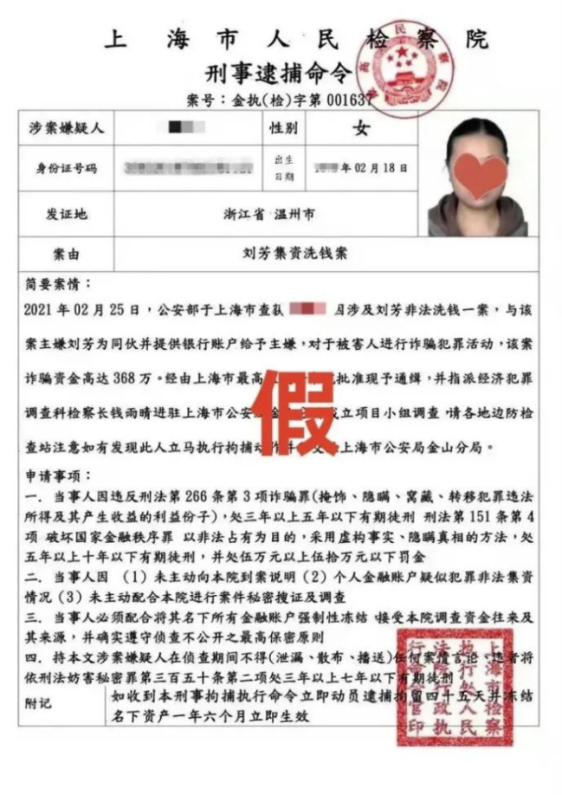
01Impersonation of Public Security, Procuratorate, and Court OfficialsScam
Thisscam involves fraudsters impersonating staff from public security,procuratorate, or court agencies. They call victims, falsely claimingthe victim’s identity has been stolen or they are suspected of acrime, and trick them into transferring money to designated accountsunder the guise of “cooperating with an investigation.”
Howto Spot the Scam
1.Unsolicited calls claiming to be from “telecom operators, banks,”etc., who then proactively transfer you to “public securityauthorities” are scams.
2.Genuine public security, procuratorate, or court agencies will NEVERask you to “transfer funds to a safe account for verification” or“pay high bail money” as part of an investigation.
3.Genuine agencies will NOT send legal documents like “warrants,”“arrest warrants,” or “bail decisions” to victims online.
02Fake Services Scam
Thisscam involves fraudsters advertising fake services (like apartmentrentals, document processing, bill payments, thesis publishing,flight ticket purchases) online via social media, websites, or searchengines. After luring victims into paying, they block them and failto deliver the promised service.
Howto Spot the Scam
1.Scammers usually only communicate online and make excuses to avoidin-person meetings or transactions.
2.Scammers often delay delivery or fail to provide the service usingexcuses like “paying an agency fee,” “paying a service fee,”or “signing a contract.”

03Fake Currency Exchange Scam
Thisscam involves fraudsters luring victims with offers of “favorableexchange rates.” They contact victims in WeChat groups, send fakebank transfer screenshots, and pressure the victim to transfer moneyfirst, thereby executing the scam.
Howto Spot the Scam
1.Scammers often post attractive exchange rate offers. Be highlyvigilant if the rate deviates significantly from the market rate.
2.Private currency exchange carries risks; you might unknowingly becomea money laundering tool for criminals, leading to legal liabilities.
04Forged Official Notification / Benefit Scam
Thisscam involves fraudsters impersonating universities, governmentagencies, or official organizations. They create fake group chats,send spoofed emails or text messages containing false notificationsabout “subsidy distributions,” “benefit claims,” “feerefunds,” “policy updates,” or “urgent notices.” Exploitingvictims’ trust in official channels, they trick them into scanningQR codes or clicking links to “apply,” “verify identity,”“make payments,” or “submit information,” thereby stealingpersonal data, bank account details, or directly defrauding victimsthrough transfers.
Howto Spot the Scam
1.Demands to Scan/Click with Suspicious Source: Any “official”notification demanding you scan a QR code or click a link to handlemoney, personal information, or claim benefits is highly suspiciousif it comes through an unusual channel (e.g., unfamiliar “internalgroup,” unofficial email/SMS) or if the information cannot beverified through the organization’s officially published,independent contact points (official website, publicly listed phonenumber, university international office/advisor).
2.Pressure / Fake Benefit Lure: Scammers often use phrases like“Deadline,” “Expires soon,” “Available to all,” or“Limited-time offer” to create urgency or dangle “freebenefits,” pressuring you to scan or click without properverification, specifically aiming to lower your guard.
PreventionTips
Fraudstersuse NFC technology to approach you and chat with you. When you arenot paying attention, they steal the money in your card through NFC.It is recommended to turn off NFC in daily life and only turn it onwhen you really need to make a payment.
Finally,international students should never trust unsolicited calls, maintainregular communication with family, remain calm when encounteringissues, and promptly seek help from college teachers, campussecurity, or embassies/consulates.